Passive Income vs. Residual Income: What's the Difference?
by Admin
Posted on 08-03-2023 11:41 PM
Income refers to
money
a person or business entity receives to provide a service or when making an investment. Passive income and residual income are two categories of income. Although these terms are often used interchangeably, they are fundamentally different. While residual income may be passive, passive income isn't always residual. Passive income is money earned from an enterprise with little or no ongoing effort.
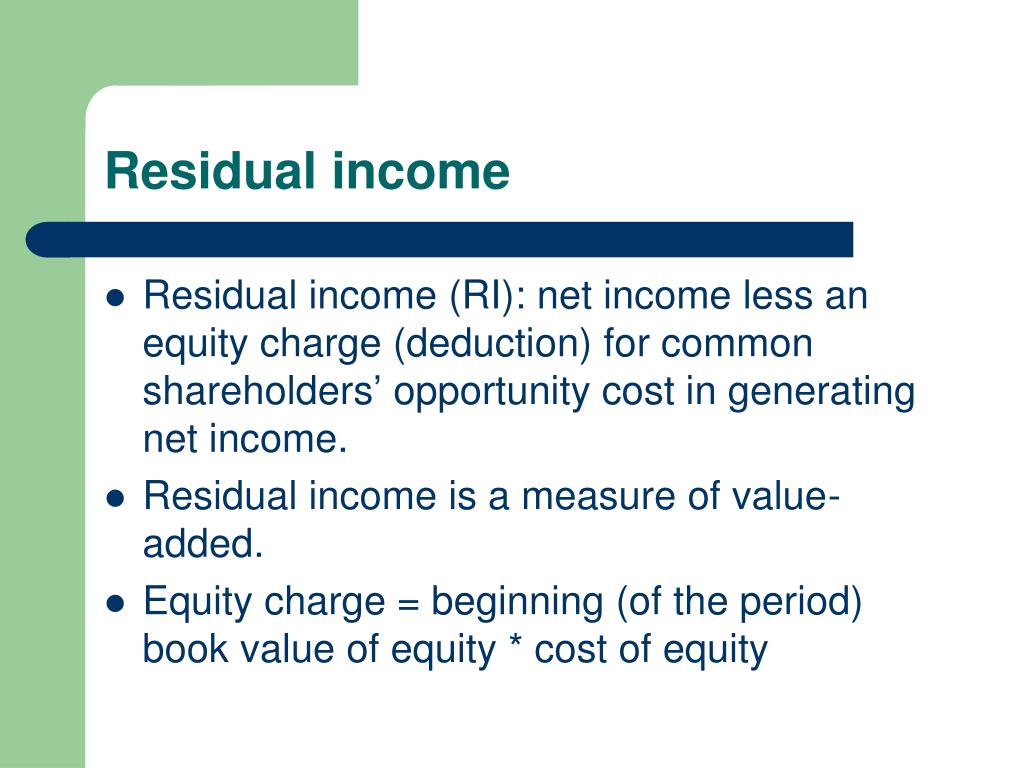 Residual income is not exactly a type of income but a calculation determining how much discretionary money an individual or entity can spend after paying their bills and meeting their financial obligations.
The differences are subtle. Residual income may be passive income but passive income isn't necessarily residual. In personal finance, passive income may be derived from stock dividends or from renting a room on airbnb. There was an initial outlay of money to buy the stocks or the house, but a tangential benefit that costs little in additional time or effort has been derived from the initial investment. It is residual income as well as passive income. Passive income is earned with little or no effort required after the initial investment. Residual income, for an individual, means the free cash available for spending after all obligations are met.
Residual income is what remains from your monthly income after you’ve paid for monthly necessities like rent, student loan payments and utility bills. But passive income is money you earn that requires little to no effort on your part. Examples of passive income can include: returns on your investments, such as stocks and bonds. Rental property earnings. Royalties from a book you’ve written. Passive income can contribute to residual income. For instance, dividends earned from stocks are passive income that can increase your total residual income. But passive income isn’t necessarily residual income. And that’s because the amount of passive income you earn from book sales may be outweighed by the expenses associated with publishing and marketing that book.
If you set up an online business , your residual income will be the profit you make after you put in the initial effort. For example, you might open a shopify store to sell profitable items. Getting the business up and running will require some effort and investment in the beginning. So you’ll subtract these items from the revenue you generate at the end of each month to get your residual income. Typically, there’s very little work required to maintain the flow of income after the initial effort is made. Hence, in the context of online business, residual income is also referred to as passive income.
Passive Income vs. Residual Income: An Overview
If you’ve ever looked for a way to make extra money, you may have come across the term residual income.
In personal finance, residual income refers to one of two things: either income received after the initial
work
has been completed, or the amount of money left over after all personal debts are paid off. For example, when you purchase a house as a rental property, the rent paid by tenants should be enough to make the mortgage payment and any maintenance on the property every month. Whatever cash is left over is residual income. Or, if you’re a musician who receives royalties years after you wrote a song, this is also a form of residual income referred to as passive income.
There are three definitions of residual income. They involve the remaining amount of income after all bills are paid , the income from passive investments, and the difference between operating income and the cost of capital. We address each one below.
The residual income is the net income earned outside the minimum rate of return. This formula requires three variables: net operating income, minimum required return, and the cost of operating assets. The residual income is usually expressed as a monetary amount. Personal residual income is the result of an investment that produces continual profits. Residual income is also called “passive income. ”corporate residual income is the profit left after all capital costs are paid.
Jumping back to residual income in the context of personal finance, many people use the terms "residual income" and "passive income" interchangeably. However, these two types of income are not necessarily the same. Passive income is money earned with little or no ongoing effort and may or may not be residual for the earner. Residual income can be generated either passively or with active effort. Why have these two income types become so closely linked? it's probably because individuals who are able to passively generate money are more likely to have residual income.
How Can I Create Residual Income?
A dropshipping store is essentially an online store where people come to buy different items. When a customer requests an item, the order goes to a third-party supplier who then ships the product directly to the customer. This means you don’t have to worry about storing inventory or how to get the item to the customer. Hence, running a dropshipping store can be one of your best sources of residual income. With suppliers handling the major aspect of your operation, i. E. Product fulfillment, you will have less active work like shipments and customer service. To start, you can create an online store on shopify.
Depending on your interests, skills, and business knowledge, you can create sources of residual income that align with your experience. If you don’t have experience in a certain area but wish to learn, there are plenty of resources to acquire the necessary skills. The main idea behind residual income is leveraging other people’s time and resources to achieve consistent revenue. Whether it’s an online product that continues to be sold or a rental property that is continuously occupied, residual income requires hard work at the beginning but the work and time tapers off once the investment is up and running.
As remote work has become a hot trend, you may not be using your home or apartment as much as you normally would. Instead of letting it sit empty, create a residual income stream from it by listing it on airbnb or a similar platform . Even renting a spare room can generate discretionary income if you don’t want to rent your entire property upfront. A tip for being successful with this strategy is to keep your tenants happy. Far too many landlords fall into the negative stereotype of being greedy, neglecting concerns and issues, and generally ignoring the expectations for amenities.
There are many ways that you can make residual income online, or in other words, make passive income with an online business. Online residual income is something readily available for those ready to explore income sources. Here are a few examples of how to make residual income online: create a high-traffic blog and put affiliate links to another business’s products on your site. When visitors to your site click through and go to the other business’s product page, you will receive a small percentage as compensation. When a visitor from your site buys a product from the affiliate business, you will likely receive a larger percentage of compensation.
What Is Active Income?
Residual income can have multiple meanings, formulas, and definitions depending on the context. In general, residual income refers to a calculation that provides the amount of money leftover that a company or individual has after all expenses have been paid. The amount of money that is left over after all expenses are covered is typically referred to as residual income, profit, net income, or earnings. One specific type of meaning for residual income is similar to the terms passive income or residual pay —in that it can represent income earned on a continual basis, not tied to specific amounts of time, and not requiring active work to generate.
You’ll often find the terms passive and residual income used interchangeably. When used in this sense residual income and passive income are the same thing. It’s probably best to use the term passive income to avoid confusion. Passive income (aka residual income) is a type of income that doesn’t require trading time for money. It continues even after you’ve made whatever initial time or monetary investment is necessary, meaning it’s the opposite of active income. These types of income differ from active income, which is the result of actively working for the money you earn . You may receive active income in the form of a salary or hourly paycheck.
Whereas residual income is leftover money, passive income is a stream of income generated by work you’ve already done or investments you’ve already made. Royalties are an example of passive income. Residual income can come from active income (e. G. , earning a paycheck) or passive income. For example, if you make $3,000 per month in royalties from a book you published, and you use $2,000 of that money to pay for your necessary expenses each month, you have $1,000 of residual income made from passive income. Residual income can also come from active income (e. G. , earning a paycheck).
Passive income includes regular earnings from a source other than an employer or contractor. The internal revenue service (irs) says passive income can come from two sources : rental property or a business in which one does not actively participate, such as being paid book royalties or stock dividends. “many people think that passive income is about getting something for nothing,” says financial coach and retired hedge fund manager todd tresidder. “it has a ‘get-rich-quick’ appeal… but in the end, it still involves work. You just give the work upfront. ”in practice, you may do some or all of the work upfront, but passive income often involves some additional labor along the way, too.
How Are Passive Income and Residual Income Taxed?
Again, the concept is the same for a commercial real estate investment. To illustrate this point, consider the type of investment vehicles that we offer . With it, we purchase a grocery store anchored retail center, which produces a significant amount of rental income. We use that income to fund the property’s operating expenses like taxes, insurance, and maintenance. Income, less these operating expenses equals a metric known as net operating income (noi). From this metric, the loan payments are made and any money left over is residual income that is distributed to our commercial real estate investors. These distributions produce a passive income stream, which is a major benefit of investing in a real estate deal.
Real estate crowdfunding relies on small investments from several people to purchase property or fund real estate development. You can sign up to be one of the investors and make easy residual income. Websites like fundrise and realcrowd allow people to pitch in at different investment tiers. As soon as your investment is processed, you become an equity shareholder in a real estate venture and start earning passively through regular dividend payout. You may also benefit from property appreciation over time. When the assets owned by the investors go up in value, dividend earnings also rise. To start, make sure to sign up with a few real estate crowdfunding websites.
Residual income is a financial term that refers to the income an individual or business receives from an asset after all of its operating expenses and debt payments have been paid off. Essentially, it is the money that remains after all of the necessary expenses have been taken care of and is often used as a measure of financial success and stability. The benefit of residual income is that it provides a steady stream of income that can be used to support one's lifestyle, save for retirement, or reinvest back into the business or investment. It can provide a cushion against economic downturns and other unforeseen events that can impact traditional sources of income.
Everyone likes the idea of making additional income, but not everyone is able to create a secondary income stream. This might be due to a lack of strategy or genuine advice. With these residual income ideas, you should be able to earn more income and typically do so passively. These methods are easy to integrate into what you are currently doing. So you can start building wealth alongside your 9-to-5 job or another primary income source. What are your favorite ways to make residual income? let us know in the comments below.